




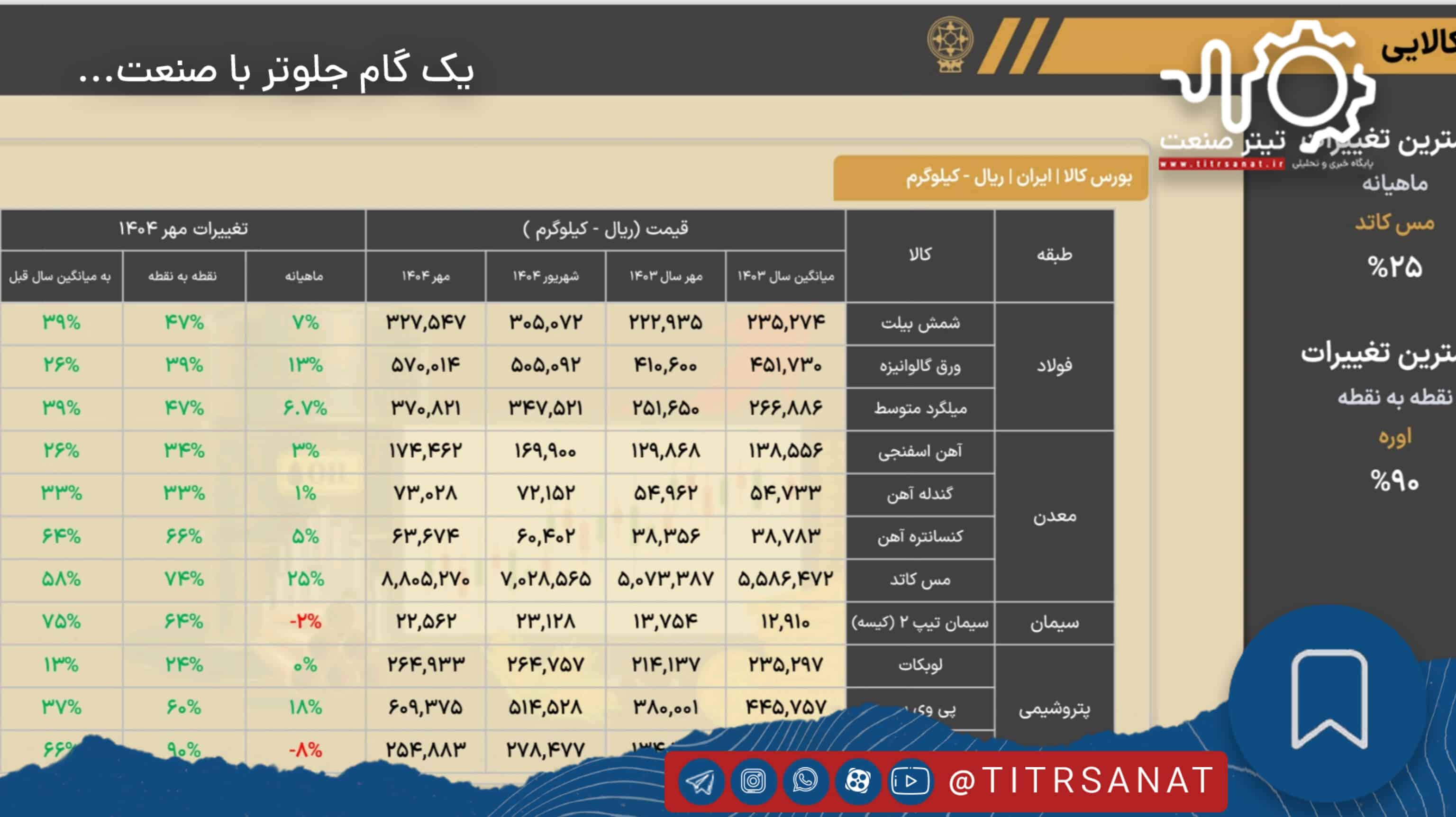
According to Titrsanat, the commodity market table of Iran in 2023 and 2024 shows significant changes in the prices of most essential, metal, and industrial product groups. These shifts have mainly occurred under the influence of currency fluctuations, overall inflation, government policies, and global factors such as the conditions of international markets.
Analysis of Price Changes and Trends
In 2023, the prices of most essential goods—including food items, base metals, and steel products—experienced significant growth. The point-to-point inflation rate for food and beverages reached 51.4%, while non-food items recorded 37.9%, reflecting the rising cost burden on households. A comparison of the 2023 annual average with the months of Shahrivar and Mehr of the same year shows that some goods saw sharper increases due to currency shocks and rising production costs. For example, the highest monthly price changes were observed in items such as poultry, steel products, and certain legumes.
Key Factors Influencing Iran’s Commodity Market
Severe currency fluctuations: The depreciation of the rial has increased the cost of imports and production inputs.
Government monetary and fiscal policies: Decisions regarding the expansion of the monetary base, subsidy reforms, and liquidity control have played a key role.
Economic sanctions: Restrictions on exports and imports, along with rising logistics and raw material supply costs, have had a direct impact on prices.
Rising production costs: Higher prices for energy, transportation, wages, and services have increased the cost of final goods.
Global factors: Fluctuations in international markets, changes in oil prices, and conditions in global metals and agricultural markets transmit external shocks to Iran’s commodity market.
Professional Analysis and Table Categorization
According to the table, goods are categorized into major groups such as base metals, steel products, food items, and primary industrial inputs. Each of these groups has shown its own sensitivity to internal and external factors.
The food group has experienced the highest growth due to inflation and supply shocks, while the metal and steel groups have fluctuated in response to the domestic construction slowdown and export demands.
Selected products such as rebar, steel sheets, and petrochemical materials have seen significant increases in the comparison period between 2023 and 2024, with the market moving toward more competitive pricing, declining purchasing power, and increased activity by intermediaries.
Summary of Figures and Trends
The average annual price increase of essential goods has exceeded 50%, and in some sectors has reached up to 200%. The major price shocks occurred primarily between Shahrivar and Mehr 2023, with their effects continuing into 2024, driven largely by currency fluctuations and restrictive policies.
Overall, the outlook for Iran’s commodity market remains heavily influenced by inflationary pressure, supply chain disruptions, and structural challenges. This situation calls for economic policy reforms, strengthening domestic production, and liquidity management to control prices.











Comments